mk48 Mechanism Details
Applicable to mk48 0.1.3 version
| Contains many differences with mk49
Geography Mechanism
Geographic Zones
- Latitudes above 1250°N are classified as the Arctic
- Latitudes below 2250°S are classified as the Antarctic
Terrain Variation
- Different latitude bands employ unique noise functions during terrain generation, producing distinct landscape features
Dynamic Map Regeneration
- The world’s terrain continuously regenerates toward a fixed reference map
- The world is divided into chunks measuring 1600 × 1600 square meters each
- Every 15–25 minutes (random interval), each chunk adjusts its height by one height level toward the reference terrain
The reference terrain is shown below: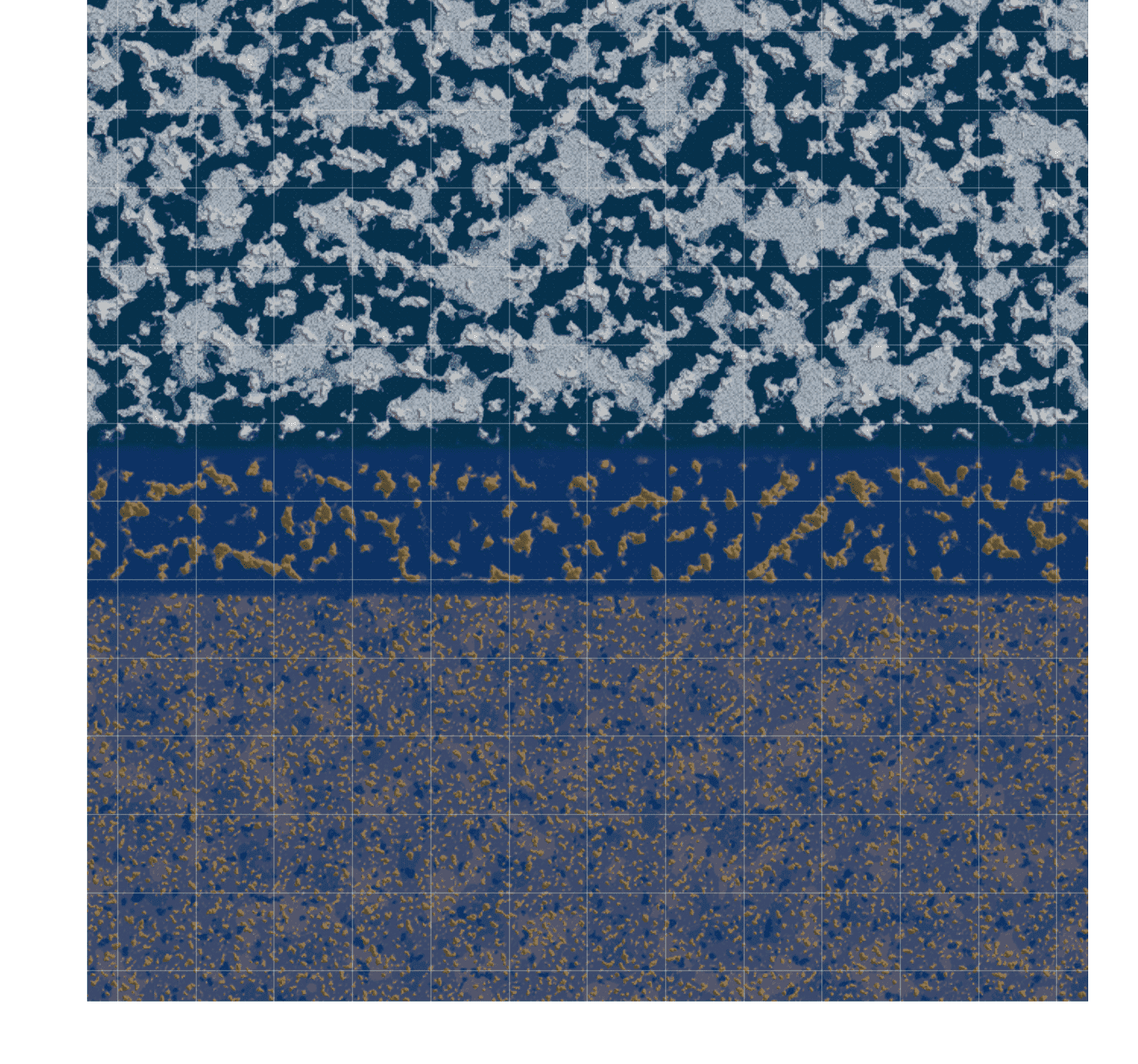 Click the image to view full size
Height levels are shown below: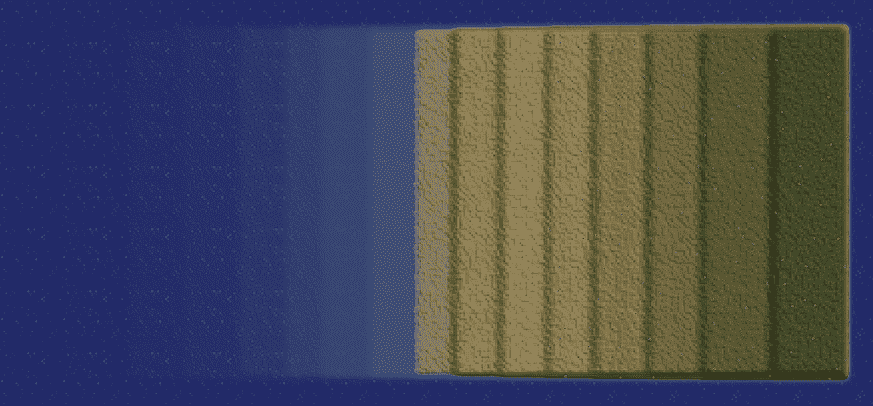
Height & Depth Mechanics
Important Height Boundaries
- Maximum depth: -256 m
- Maximum height: 254 m
- Sea level: 0 m
Vertical Collisions
-
Overlap Ranges
- Entities have zero thickness and collide vertically only if their height difference falls within a defined overlap range
- Airborne entities (height > 0) never collide with underwater entities (height < 0)
-
Standard Overlap Range
- Most entities: 64 m (1/4 depth)
-
Special Overlap Range
- Unguided torpedoes: 128 m (1/2 depth)
Submarine Dive Limits
-
Seabed Depth (Terrain Limit)
- Normally matches terrain height — submarines cannot pass below the ocean floor
- Exception: Under thin Arctic ice sheets, dive limit extends to -256 m (full depth)
-
Diving Capability Limit
- The submarine's max depth is also decided by its diving capability, given in the submarine's data
- Eventual max depth =
min(terrain depth, submarine max diving depth) - submarine draft
Entity Altitude & Guidance Behavior
-
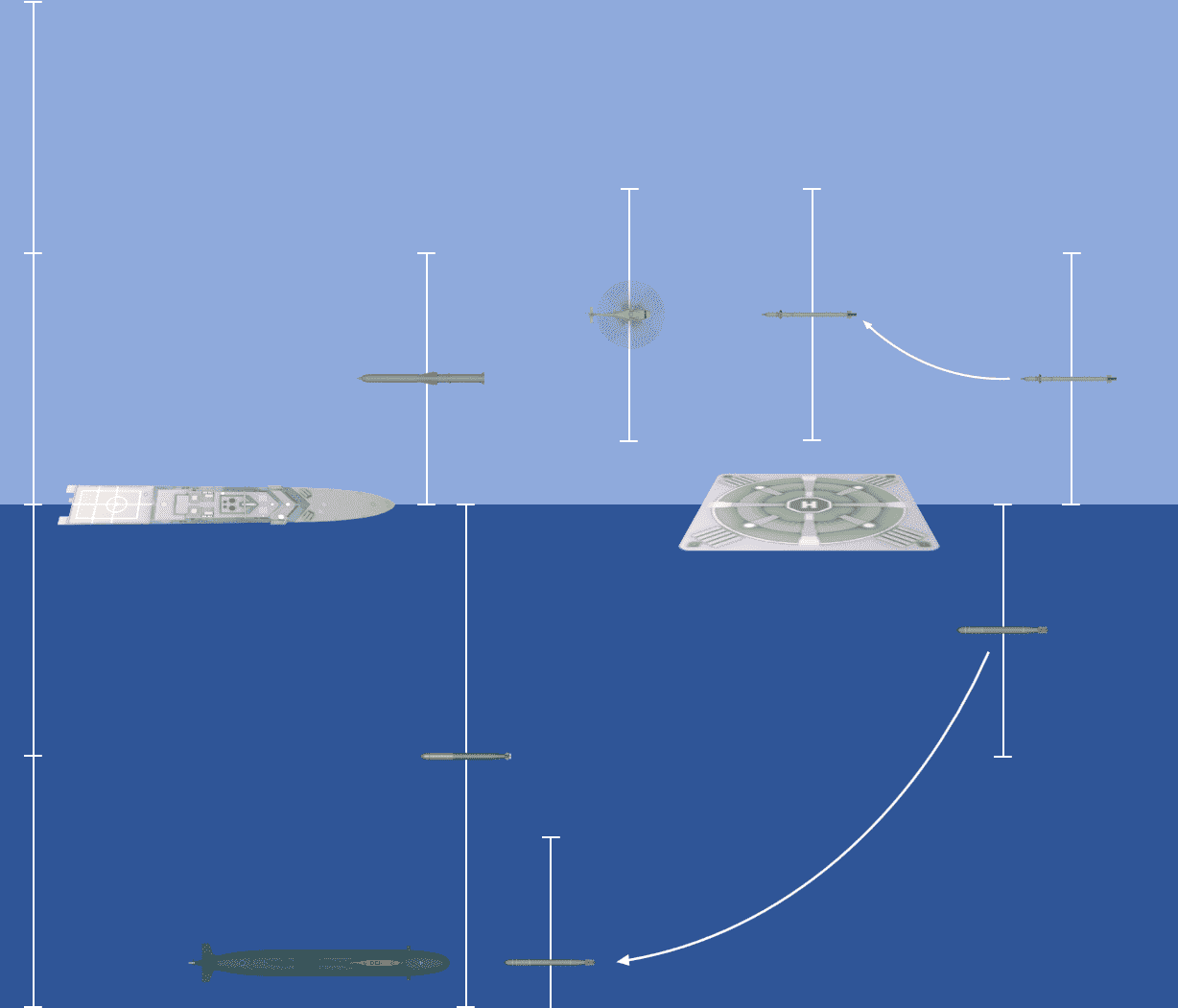
Default Altitudes
- Ships: 0 m (sea level)
- Guided torpedoes: -62 m (1/4 depth)
- Unguided torpedoes / Mines: -126 m (1/2 depth)
- Depth charges / Sonar decoys: -256 m (seabed)
- Shells / Rockets / Rocket torpedoes / Missiles / Anti-air missiles: 62 m (1/4 height)
- Aircraft: 92 m (3/8 height)
- Guided weapons leave their default altitude upon acquiring guidance, moving to the target's altitude
- Unguided torpedoes stay at 1/2 depth, with a collision range of 1/2 depth, allowing collision with all surface/underwater ships
-
Guided torpedoes, when not guided, stay at 1/4 depth, with a collision range of only 1/4 depth, potentially blocked by obstacles such as oil rigs
But when locking on an underwater target, they descend to the target's depth, possibly passing under obstacles - Aircraft stay at 3/8 height, with a collision range of 1/4 height, collide only with aerial weapons, never with ships
-
SAMs (Surface-to-Air Missiles) stay at 1/4 height when not guided, with a collision range of 1/4 height, colliding with obstacles like oil rigs
But when locking on an aircraft, they climb to 3/8 height, avoiding collision with obstacles
Thus, only guided SAMs can fly over obstacles
Kill Award Mechanism
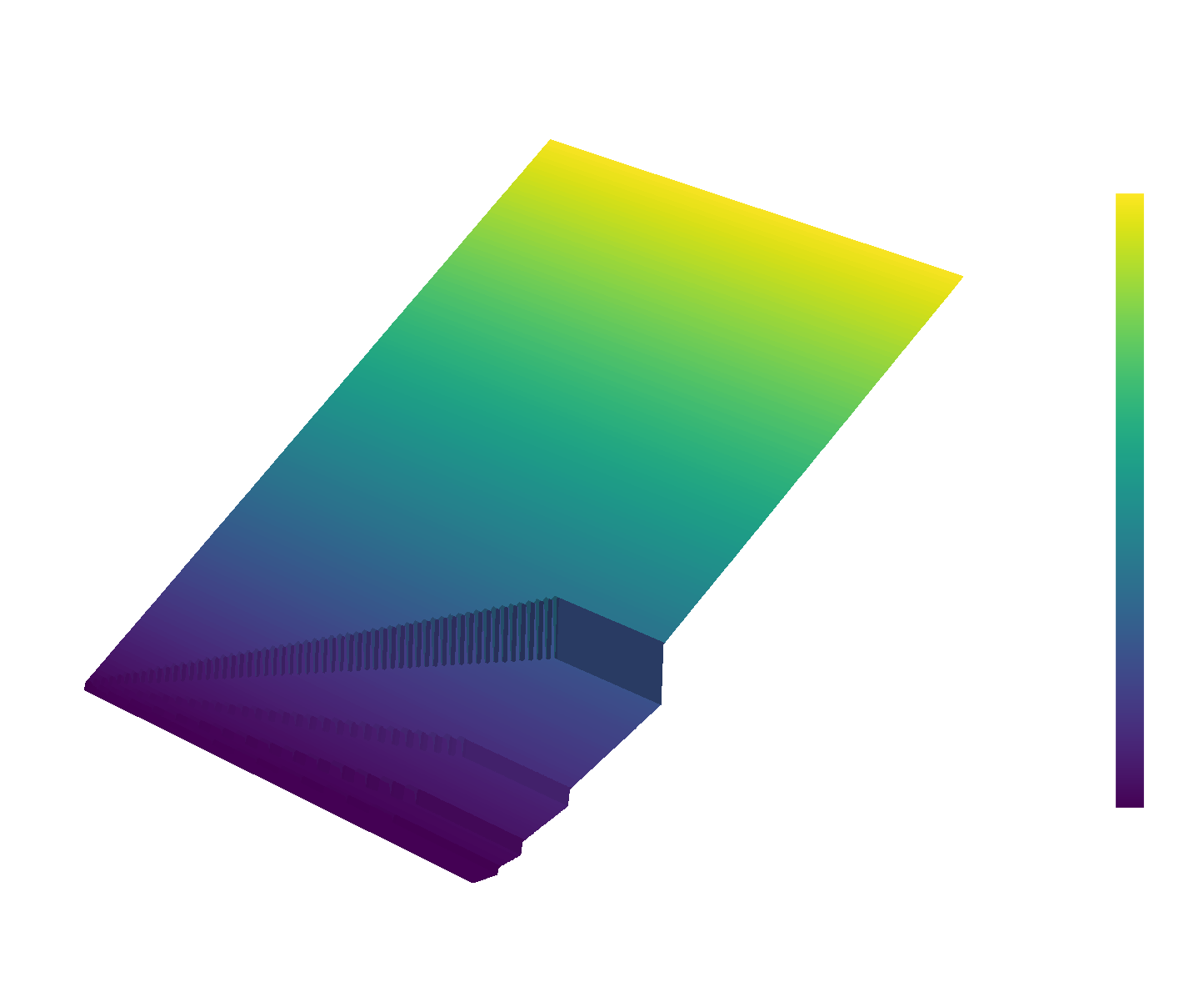
Weapon Kill Rewards
- Base XP:
10 points + 1/4 of the victim's score -
Calculate score ratio
killer's score / victim's score; if killer's score exceeds 2260 (level 10 ship), this ratio is2260 / victim's score - If score difference is extreme (ratio > 16): No reward
- If score difference is large (ratio > 8): Receive 1/4 of base XP
- If score difference is moderate (ratio > 4): Receive 1/2 of base XP
- If score difference is small (ratio > 2): Receive 2/3 of base XP
- Otherwise: Receive full base XP
Collision Kills
- Half of a weapon kill reward
Collectibles & Obstacles
Obstacle Types
-
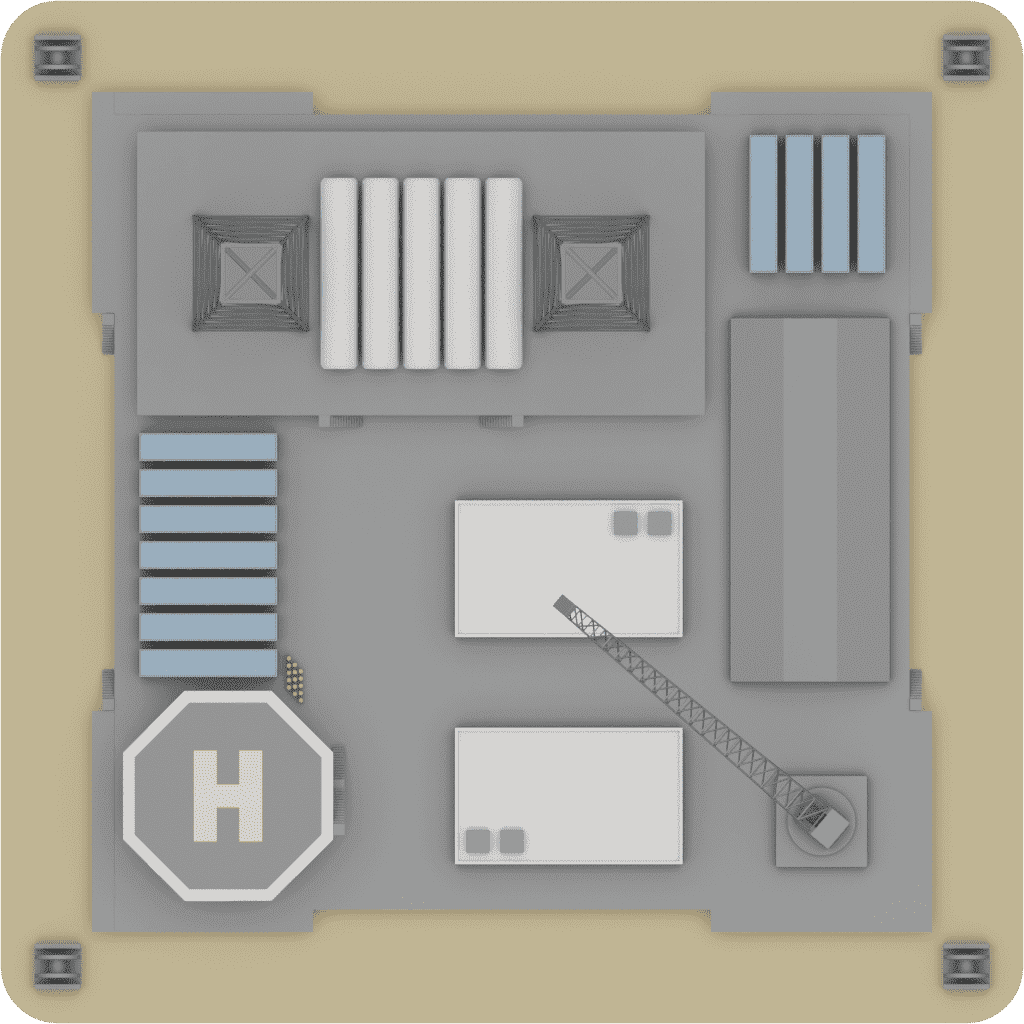
Oil Rig
-
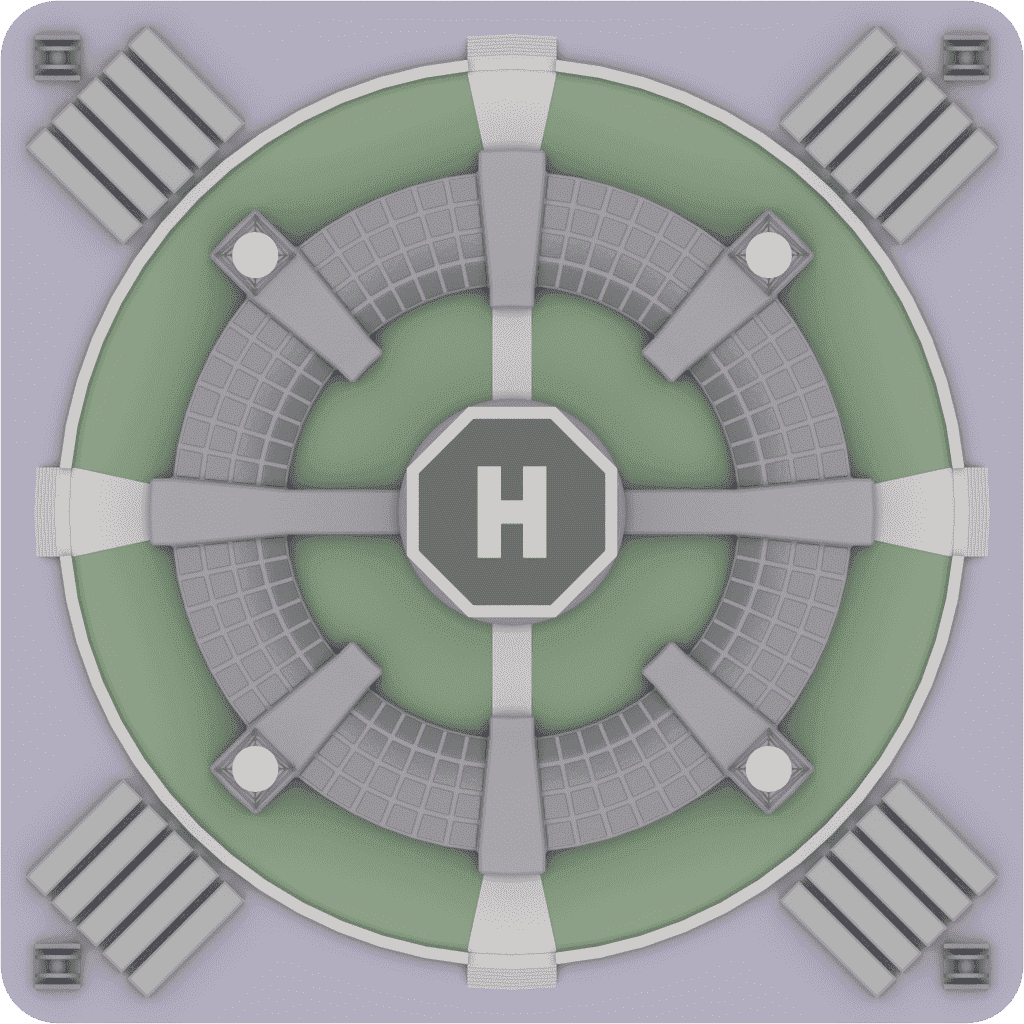
Helicopter Pad
Collectible Types
- Barrel: Spawned periodically by oil rigs & helicopter pads
- Coin: Dropped by ships on natural death
- Crate: Dropped by East Indiaman and Olympias on death, also randomly spawned across the map
- Scrap: Dropped by most ships on death
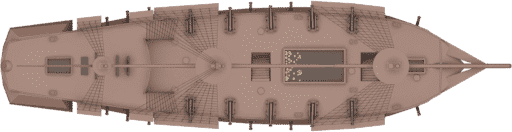
The four types of collectiblesEast Indiaman and Olympias



Generation Mechanics
-
Ship Death Drops
-
Cargo Quantity
- The number of cargo scales linearly with ship length (+ random variance)
-
Cargo Types
- East Indiaman: Crates + Coins
- Olympias: Crates
- Oil Tanker: Scrap + Barrels
- Other ships: Scrap
-
Coin Drops
- Dropped only by Natural deaths (e.g., grounding, collision with obstacles, collision with map boundaries, quit game)
- The value dropped is
min(2000, score / 4)
If a teammate is about to quit, sinking him with a weapon grants the most points
The problem of ramming them: Get only half the experience of weapon kills
The problem of letting them quit the game and collect the collectibles he dropped: Coins dropped has upper bound of 2000 points -
Cargo Quantity
-
Barrel Spawns
- Oil rigs: 1 barrel every 4 seconds on average
- Helicopter pads: 1 barrel every 2 seconds on average
- Barrels are generated in a ring area 60-120 meters from the obstacle center
- They are spawned with 10-20 m/s random initial velocity
-
Crate Spawns
- Target density: Approximately 1 crate per 170 x 170 square meters
- Randomly generated across the entire sea in the world
Pickup Rewards
-
XP Rewards
- Barrel: 1 point for regular ships, 2 points for Oil Tanker
- Coin: 10 points
- Crate: 2 points
- Scrap: 2 points
For most collectibles dropped from ship deaths, picking them up with an Oil Tanker does not yield extra benefits
The only exception is when the dead ship is also an Oil Tanker -
Health and Reload Rewards
- Condition: The collectible is not spat out/dropped by allies/yourself
- Health: Restore 0.025 health
-
Reload boost:
- Barrel/Coin: No acceleration
- Crate: Accelerate 0.2 seconds of reload
- Scrap: Accelerate 0.1 seconds of reload
A viable tactic: When a teammate is injured, leave the team and spit out coins to accelerate their health recovery (But cannot accelerate their reload)
Obstacle Mechanics
-
Oil Rig Upgrades
- Condition: Player spits coins that collide with oil rig
- Effect: Oil rig absorbs coins, each coin has a 10% chance to upgrade oil rig to helicopter pad
-
Density Control
- Target density: 1 obstacle per 1000 x 1000 square meters
- The total number of oil rigs and helicopter pads is controlled globally
-
Spawn Rules
- If the current obstacle count is below target, randomly select a point on the map and decide whether to generate, based on the following rules
-
Arctic Regions (above 1750N)
- 100% chance to spawn helicopter pad
-
Arctic Corridor (1250N to 1750N)
- No platforms spawned
-
Temperate Seas (below 1250N)
- 25% chance to spawn oil rig
- 75% chance to give up spawning
-
Destruction & Lifespan
- When a helicopter pad dies, if latitude > 1250N, it disappears immediately
- Otherwise, the helicopter pad downgrades to oil rig
- When an oil rig dies, it disappears immediately
- If any player is near the obstacle (excluding bots), the obstacle lifespan increases at 10x the time tick to prevent disappearance in front of players
Spotting Mechanism
Two stages of Spotting
- Fully spotted: Displays the entity's complete texture to the player
- Half spotted: Displays only the unknown contact icon
- For each entity near a ship, the server determines its spotting level based on the following rules
Unknown contact icon: Indicates the detected entity's position and orientation
Spotting Teammates
- Entities belonging to yourself or teammates within 800 meters are fully spotted
Spotting Weapons
- Weapons within 60 meters are fully spotted
- Note: Distance is measured to the closest point on the ship's hull, not its center
Calculating Blur Coefficient
- The final blur coefficient is the minimum value among radar, sonar, and visual detection coefficients
- Lower coefficient = clearer detection
-
General Blur Coefficient Rules
- Blur increases with distance
- Blur is proportional to square of the target ship's stealth coefficient
- Larger ship length reduces blur coefficient
- As detector descends from surface to 35% depth, visual and radar efficiency weaken linearly until completely unusable
- Radar/sonar/visual detection ranges increase linearly with ship length, but max 2000 meters for all
- Submerged submarines with incomplete torpedo reloads are easier to detect
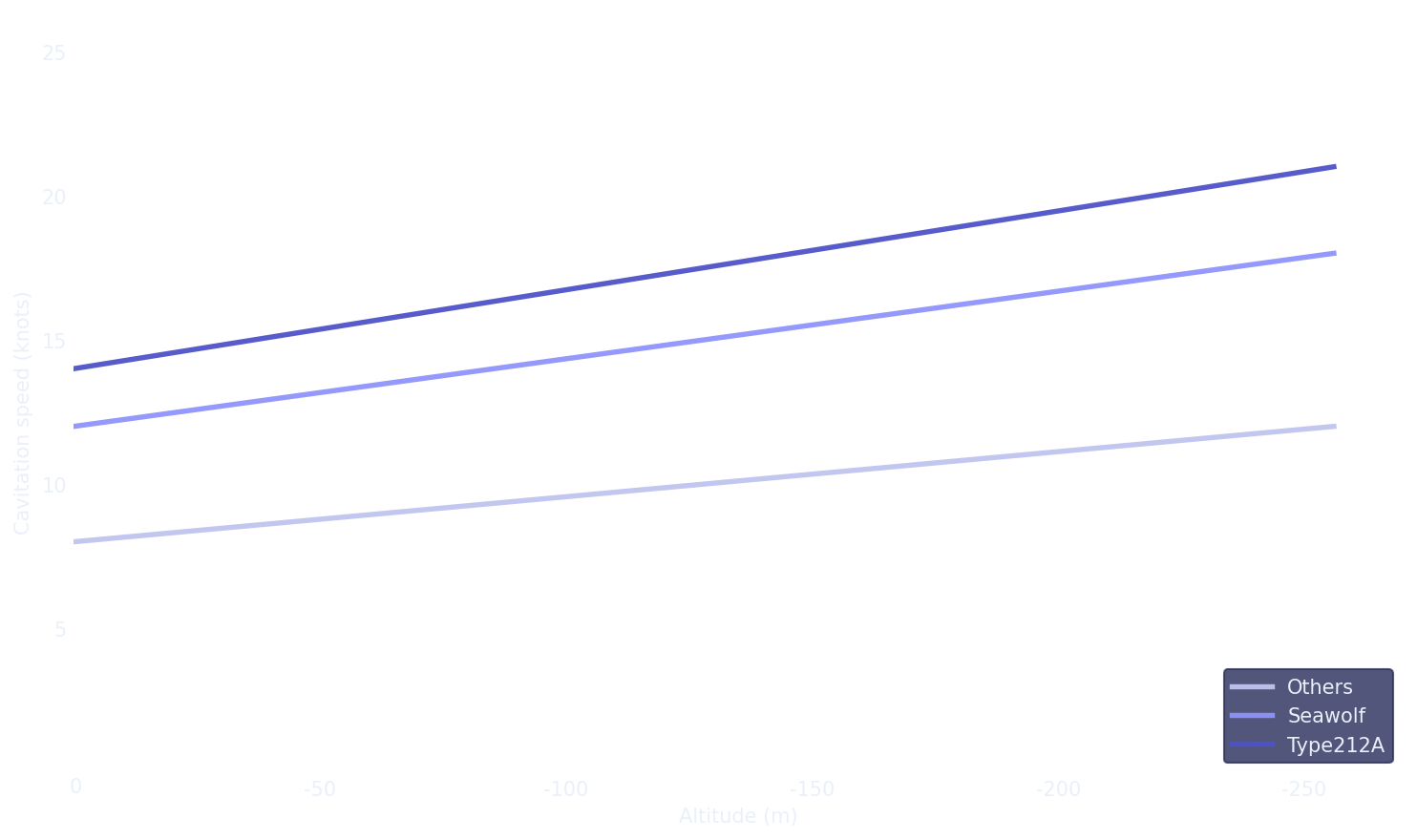
Seawolf has 0.5 stealth coefficient, increases blur coefficient by 4x
Type212A has 0.75 stealth coefficient, increases blur coefficient by 16x

Prevents torpedoes from "appearing out of nowhere," reducing cheating suspicions
Reloading produces detectable noise
Encourages cautious, infrequent firing by submarines -
Radar Blur Coefficient
- Ineffective against submerged targets
-
Active Radar
- Faster target speed → smaller blur coefficient
- At equal distance, larger detector radar range → smaller blur coefficient
- Ships have large active radar detection range
- Weapons have small active radar detection range
-
Passive Radar
- Stronger target emissions → smaller blur coefficient
- Strongest: Missiles
- Next: Ships with active radar
- Weaker: Other ships
- Weakest: All other entities
-
Sonar Blur Coefficient
- Ineffective against targets above water
-
Active Sonar
- At equal distance, larger the detector sonar range → smaller blur coefficient
- Unlike active radar, blur coefficient is independent of target speed
- Largest range: Submarines
- Next: Other ships
- Smaller: Most weapons
- Weakest: Rocket torpedoes
-
Passive Sonar
- Stronger noise from entity → smaller blur coefficient
- Loudest: Weapons & decoys
- Next: Ships with active sonar
- Quieter: Other ships
- Quietest: All other entities
- Higher detector speed → larger blur coefficient (own noise interference)
- Target speed exceeding cavitation speed → extra noise, linear with excess speed
- Deeper water → higher cavitation speed
- Better stealth → higher cavitation speed
Ships with Limited Sensors
Figure Name Active/Passive Sonar Active/Passive Radar 
Fairmile D ✗ ✗ G-5 ✗ ✗ 
Komar ✗ ✓ Olympias ✗ ✗ 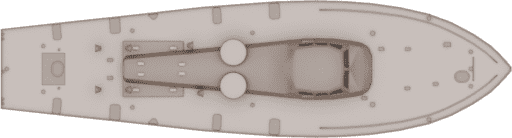
PT-34 ✗ ✗ 
Momi ✗ ✓ 
Type VII C ✓ ✗ 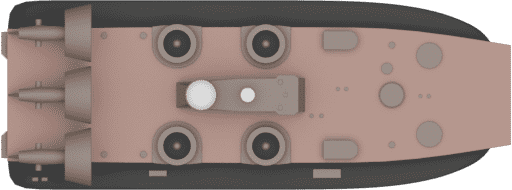
Zubr ✗ ✓ 
Espana ✗ ✗ 
Freccia ✗ ✓ East Indiaman ✗ ✗ 
Lublin ✗ ✓ 
Oberon ✓ ✗ 
Osa ✗ ✓ 
Dreadnought ✗ ✗ 
Dredger ✗ ✗ 
Golf ✓ ✗ 
Leander ✗ ✓ 
Oil Tanker ✗ ✗ 
Akula ✓ ✗ 
Essex ✗ ✓ 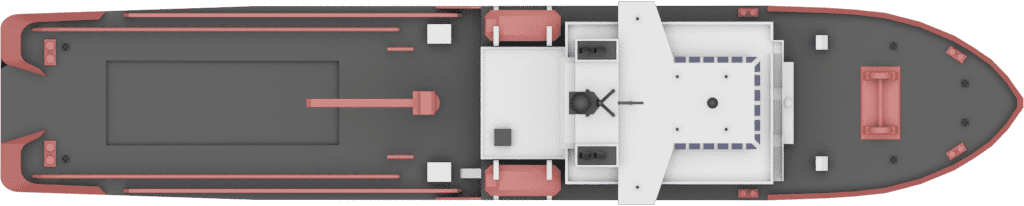
TerryFox ✗ ✓ 
Town ✗ ✓ 
Bismarck ✗ ✓ 
Montana ✗ ✓ 
Clemenceau ✗ ✓ 
Yamato ✗ ✓ 
Iowa ✗ ✓

-
- Submerge to max depth
- Turn off active sonar
- Maintain speed below cavitation speed
- Ensure full reload
Cavitation speeds for submarines at max depth
Figure Level Name Max Depth Cavitation Speed
2 TypeViic -176m 10.69
3 Oberon -196m 10.99
4 Golf -246m 11.78 
5 Skipjack -204m 11.11
6 Akula -246m 11.78 
7 Ohio -244m 11.72
7 Type212A -244m 20.59 
8 Yasen -244m 11.72
9 Seawolf -244m 17.61
To achieve optimal stealth, submarines must: -
Visual Blur Coefficient
- Follows the general blur coefficient rules
- Determine fully spotted/half spotted/not spotted based on blur coefficient thresholds
Hit Damage Mechanism
Hit Location
- Hit ship center: 100% damage
- Hit ship bow/stern: 60% damage for regular ships, 80% for submarines
- Linear interpolation for damage multiplier at other locations
Spawn Protection
- Completely immune weapons upon spawn, normal damage after 20 seconds
- Immune multiplier linearly interpolates
- Spawn protection ends immediately when ship fires
Ship-Ship Collision Damage Calculation
-
Base Damage
- Higher ship HP → higher collision base damage
- Use the smaller base damage from both ships as equal base damage for both
- Multiply by hit location multiplier
-
Ship Type Modifier
-
Ramming ships: Damage reduction, multiply by
1 / ramming ship's collision damage bonus - Submarines: 1.5x damage taken
- Non-submarines surfacing to collide with other ships: 10x damage taken
Ships with special ramming capabilities
Figure Name Collision Damage Bonus 
Zumwalt 1.5
Olympias 3
Terry Fox 2.5 Thus, changing to a surface ship underwater and surfacing to collide with others results in instant death
-
Ramming ships: Damage reduction, multiply by
- Multiply by spawn protection multiplier
-
Multiply by the enemy's collision damage bonus
- Determined by enemy ship data
Weapon-Ship Collision Damage Calculation
-
Base Damage
- Determined by weapon data
- Multiply by hit location multiplier
-
Torpedo Resistance
- Determined by ship data
- Multiply by spawn protection multiplier
Anti-Air Mechanism
- Anti-air is a passive defense mechanism to intercept aircraft approaching ships, it is not player-controlled
Anti-Air Range
- Equal to the outer circle displayed by the circular HUD
Damage Mechanism
- No numerical calculation — aircraft are destroyed instantly on hit
- Hit probability is evaluated every server tick (10 ticks per second), with each check independent
Base Hit Probability
- 100% when an aircraft is directly above the ship’s center
- 0% when an aircraft is at the edge of the anti-air range
- Probability decays quadratically: very high near the ship’s center, very low near the anti-air boundary
Therefore, when attacking surface ships with carrier aircraft, avoid flying directly over ship centers
Anti-Air Strength Coefficient
- Base hit probability is multiplied by the ship's anti-air strength coefficient
- Dredger / Submarines / Oil Tanker have an anti-air strength coefficient of 0 — they have no AA defenses
- All other ships have an anti-air strength coefficient between 0.1 and 0.5, linearly interpolated by ship length
Dredger and Oil Tanker
Although modern warships possess advanced anti-air systems, in-game their anti-air performance is weaker than that of longer WWII-era battleships